Magazine

Traditional presses, hydraulic or mechanical: how to choose the right press

Among the machines used for sheet metal processing, presses are the most varied in type, application and constructive design. They exist in a wide range of variants, subtypes and special configurations.

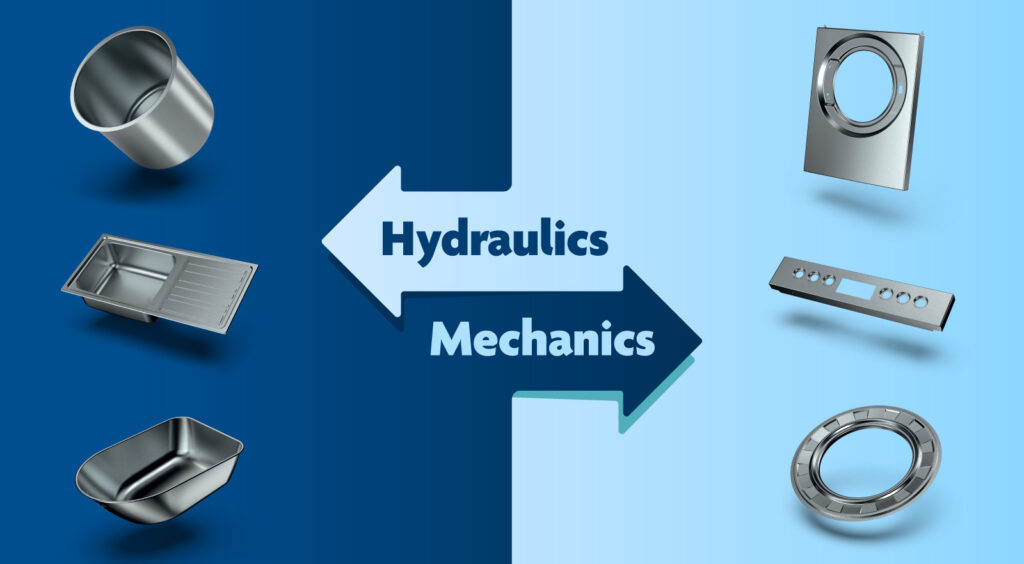
Single, double or triple-action presses in the hydraulic world; screw, eccentric and knuckle-joint presses in the mechanical one. A variety that reflects the technical response to the many demands of industrial production.

Hydraulic and mechanical presses share the same market, sheet metal and material forming, but operate according to profoundly different constructive principles. They are two tools in the same toolbox: each has its own application domain, where the other can rarely compete.

The choice between the two technologies depends on the nature of the part to be produced and on production volumes, not on price.

Read more
hydraulics mechanic cavenaghi ridolfi mag
What is a hydraulic press and how does it work?

The press is a machine designed to hold one or more molds, the moving parts of which are moved so as to be able to provide sufficient force to deform or cut the material. In sheet metal processing machinery, hydraulic presses are used in industrial contexts where force, control, and repeatability are required. They are used in numerous production sectors because they allow for the management of even complex processes with precision, operational continuity and great adaptability.

Specifically, an hydraulic press for molding uses the force of a fluid (typically hydraulic oil) to compress, shape, or cut materials, primarily metals or plastics, through the use of a mold. It can exert pressures ranging from a few tons to tens of thousands of tons.

The main components that make up a press are:

  • Hydraulic power unit: the “motor” that pumps oil and generates pressure.
  • Cylinders: transform the energy of the fluid into linear mechanical force.
  • Mold: composed of a male part (punch) and a female part (matrix), determines the final shape of the piece.
  • Control System: valves and sensors that regulate press strokes, speed, force and cycle time.
Read more
Hydraulic presses | Cavenaghi&Ridolfi